About Me

My photo
Lover of anything vintage. I spend my free time looking at antiques,watching and collecting classic films,and reading some of the greatest literary classics known to man.This blog is just my way of sharing my interests with other people.
Showing posts with label books. Show all posts

Sunday, March 30, 2014

"I wished I had died before I ever loved anyone but her..."-Ernest Hemingway

Welcome back to Think Classic after yet another absence. Once again, we apologize for our silence over the last several weeks, but we hope that today's post will make up for it. We have a very special treat that we are excited to share with you. It has been almost 2 years since we did a book post, and today's review should send you to the nearest Barnes and Noble.

The Paris Wife
2012 novel
by Paula McLain

I purchased The Paris Wife on a whim while on a trip to Barnes and Noble about a month ago. Like most people who are educated in literature and history, I am familiar with not only the work of Ernest Hemingway, but also his life. After reading the back cover I was instantly intrigued and took the novel home with me. I
was stuck in a reading rut, having previously finished a wonderful book, but having no idea what to read next, so that it had actually been a few months since I'd sat down and rifled through some pages. I was wary of this historical novel, as I usually am when someone seemingly makes up a story about historical facts. But from the very first page, I was lost in it, already desperate for more each time I had to put it down.
The book begins in Chicago, just 20 years after the turn of the century, which is when and where a young, ambitious, and as of yet unpublished Ernest Hemingway met his first wife, Hadley Richardson. I found myself falling in love with their relationship, just as Ernest found himself falling in love with the honest and compassionate Hadley. I got caught up in their year long whirlwind romance and the promise of a life in Paris, just as they did.
The two married on September 3, 1921, and very shortly after set off for France. They were poorer than poor, and yet made the best of their life together in their rundown apartments, still managing to rub shoulders with notable names such as Gertrude Stein, Ezra Pound, Scott and Zelda Fitzgerald, and more. They also managed to travel to beautiful and interesting places such as Schruns, Austria; Lausane, Switzerland; and of course, Pamplona, Spain.
I was locked in the pages of this novel, traveling to all of these places and vacationing with the young and happy Hemingways, meeting these people I have only read about before. I was wandering around the streets of Paris with Hadley, and ducking into little cafes. I was locked in Ernest's writing room while genius burned as he feverishly scribbled the words that would become The Sun Also Rises. I felt the couple's despair when his life's work was stolen. I got to share in the eventual joy they felt when they had their son, Bumby.
It was enthralling, in the best ways, and yet there was always the underlying knowledge of eventual tragedy. Knowing that, as happy as they seemed in this moment or that chapter, things would not stay that way. Because I was also locked in the pages of the book, as a silent witness to their struggles. I watched their marriage deteriorate, and saw the cracks form that would eventually cause their relationship to crumble. I hated the other woman for Hadley, who saw her as a friend. I wanted to slap Ernest silly for his mistakes, but also wanted to cry for him, and occasionally with him. And, as I approached the final pages, I didn't know if I could say goodbye to the book. Just as Ernest and Hadley were wondering how they could really say goodbye to each other and wondering what they would do next, I was wondering how I would move on to my next book, while still being enchanted with this apparent masterpiece.
It is a wonderful book. The author has a beautiful way with words that gave her the ability to create an emotional and exciting story, while also keeping to the period, the places, and the people according to historical facts.It is a novel, but it is also genuinely true. You will travel to places you've never been, and see things that you never have. You will get lost in it.
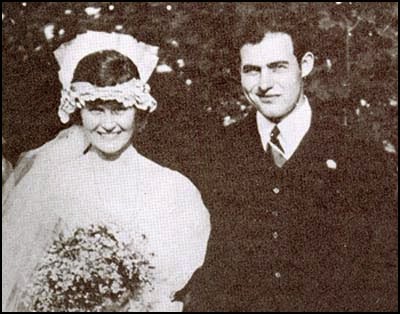

"It was sometimes painful for me to think that to those who followed his life with interest, I was just the early wife, the Paris wife. But that was probably vanity, wanting to stand out in a long line of women. In truth it didn't matter what others saw. We knew what we had and what it meant, and though so much had happened since for both of us, there was nothing like those years in Paris, after the war. Life was painfully pure, and simple, and good, and I believe Ernest was his best self then. I got the very best of him. We got the best of each other."
Hadley Richardson
The Paris Wife

"The city was never to be the same again. When I returned to it, I found it had changed as I had changed. Paris was never the same as when I was poor and very happy."
Ernest Hemingway

Thursday, January 31, 2013

Change is a good thing...maybe?

Greetings, all.

Lately I've been feeling the great conviction as both a book and movie lover, to shed some light on film adaptations, which I think we can all agree are tricky. This is probably due to the fact that I keep running into more and more buzz, news, and speculation on upcoming movies (i.e.- The Great Gatsby), and have also been reading up on some articles on that infamous discussion which will undoubtedly never be resolved--BBC Pride & Prejudice vs Joe Wright's Pride & Prejudice (Matthew Macfadyen is my leading man, in case you were wondering).

When discussing something like this which tends to be so controversial and which holds the great potential of the looming threat of people breaking out in passionate argument, there is something you should know about me and my personal opinions: I love books, I love movies, and I don't usually get too ruffled about details that have been skewed, providing that they don't change the entire outcome of the story. I'm the person you were sitting next to in the theater at the midnight premier of the Harry Potter movies who just shrugged and said, "That's not so bad," much to the chagrin of people around me. Although even I, like everyone in this world, have my limits.

Now, that also leads me to point out one of the number one things which I encourage people to keep in mind when it comes to film adaptations of books:

It is never going to be perfect.

Never. There is always going to be something that isn't quite the same, and to that same effect--you can't make everybody happy. Even if a film adaptation is outstanding and nearly perfectly done, there is always going to be somebody who is bent out of shape because that one line wasn't said right, or that one scene was cut off, or because what's-his-name doesn't look the way they imagined. 
Having said all that, in my personal opinion, I feel that good and sometimes even excellent film adaptations are entirely achievable on a general level if these most basic of guidelines are adhered to:

1) Do your best to cast actors and actresses who actually look like the characters they are expected to portray.
    I made this #1 because it generally seems like it doesn't matter what else happens in the rest of the movie--if the leading man or lady makes their grand entrance and they don't look the part, then people are automatically going to be moaning their distress. I stick by what I said earlier when I mentioned that you cannot make everyone happy when you bring a character to life on the big screen. Minor changes are acceptable. However, that doesn't give you license to get "creative" and pick someone who looks nothing like the person they are expected to portray. Daniel Radcliffe has dark brown hair and blue eyes, but he still made a great Harry Potter. On the other hand, I can't even begin to list the cringe-worthy differences between the novel version of Little Women's Professor Bhaer and Gabriel Byrne, no matter how good of an actor he is. And, for the love of all that is holy, please choose someone who is at least somewhere within a 5-yr range of their character (cough*Greer Garson*Pride & Prejudice*cough). On the totally opposite side of the coin, I'd have to say the best on-screen character representation I've seen would have to be Gemma Arterton in Tess of the D'Urbervilles, hands-down.
Such a basic thing to make your target audience happy. So just remember:
TRAVESTY:

BAD:

BETTER:

BEST:

2) Do not change the story.
    You can be forgiven for the occasional line fub, and we won't entirely hold it against you if you mesh some scenes together for times sake. We will probably even overlook a small number of location details, but if these things or anything else are part of an overall equation that leads to a totally and completely different story, then you're condemned.

3) Don't make a character into a person that they are not.
    So, the movie has started and most of the theater is grumbling about the imperfect presence that is the main character but that's all they're doing for now--grumbling, huffing, sighing, etc. I guarantee that will instantly become much more vocal and violent if this impostor opens their mouth and says things in a manner, tone of voice, or with such facial expressions that it gives them a different personality than what was originally insinuated or intended in the book. I just hate to add fuel to the fire here, but my case in point would be Colin Firth's Darcy vs Matthew Macfadyen's Darcy. Entirely setting aside the fact that I think MM is McDreamy, the main reason I approve of him over CF is because he actually portrays some emotion towards the end of the movie, which is what happens in the book the last time I checked. Honestly, CF is too stiff and you can never discern any of the discomfort or emotion or love for Elizabeth that should be there--not even by the final scene.
FITZWILLIAM DARCY:

FAKEWILLIAM FARCEY:

4) Don't eliminate the entire ending of the story.
    I'm not talking about changing the outcome, as mentioned above. I'm talking about completely and totally cutting it out, like it never happened. When the 2011 version of Jane Eyre came out, I was excited to see it because I really enjoy the book. I went to see it, and the imagery was beautiful! The characters were okay. Overall, I was thinking, "You know, this is a pretty okay film adaptation. I might even watch it again." And then what happens?Nothing. It just ends....and not where it is supposed to. It doesn't show the proper ending of the story which is the whole point of the story. Never watching that one again.


Cute but not good enough. Shame on you, Cary Joji Fukunaga.

Those are the main and most basic rules I have on the list, however even I must admit there are some adaptations that will probably fail even if they do follow the rules (which are not more like guidelines). Unfortunately my main example of this would be the 2013 adaptation of The Great Gatsby. Naturally, as I'm sure you would probably guess, I love the book. I think it is an interesting and sad story that is told through amazing verbal images of life as the elite in the 1920s. Unfortunately, most people don't realize that film adaptations of that story have already been done and they were not at all successful. Every once in a while you just run across a story that is wonderful in book form, but it just does not translate on the big screen. Besides The Great Gatsby, another example would be The Portrait of a Lady.
So, to be honest, I guess the main point of this was just a rant that led up to the fact that I will probably just watch The Great Gatsby from Redbox in the comfort of my home if I choose to invest in viewing it at all. And to say that Matthew Macfadyen wins.Always.

Sunday, December 9, 2012

"Give three cheers for this Christmas old!"

A Very Vintage Christmas post #5

And, in case you're keeping track like me, it's 16 days til Christmas!

Now, I know that I am rather unusual compared to quite a few people in that one of the things I love to do best on cold nights during the Christmas holidays is curl up with a warm blanket, a cup of peppermint hot chocolate, and a great book to get me into the Christmas spirit.

That's right, I love to read.

And there are so many types and forms of literature that pertain to Christmas--poetry, novels, short stories, etc. Well, a couple of years ago I found an old book in my parent's house that was full of traditional Christmas short stories. Naturally, I couldn't put it down after I found it. And one of the ones I particularly enjoyed was an excerpt from a rather old novel. And today, I bring you an excerpt from one of its chapters that really is full of cheer and Christmas spirit.

The Pickwick Papers
An 1836-7 novel
by Charles Dickens

An excerpt from Chapter 28:
"As brisk as bees, if not altogether as light as fairies, did the four Pickwickians assemble on the morning of the twenty-second day of December, in the year of grace in which these, their faithfully-recorded adventures, were undertaken and accomplished. Christmas was close at hand, in all his bluff and hearty honesty; it was the season of hospitality, merriment, and open-heartedness; the old year was preparing, like an ancient philosopher, to call his friends around him, and amidst the sound of feasting and revelry to pass gently and calmly away. Gay and merry was the time; and right gay and merry were at least four of the numerous hearts that were gladdened by its coming.
And numerous indeed are the hearts to which Christmas brings a brief season of happiness and enjoyment. How many families, whose members have been dispersed and scattered far and wide, in the restless struggles of life, are then reunited, and meet once again in that happy state of companionship and mutual goodwill, which is a source of such pure and unalloyed delight; and one so incompatible with the cares and the sorrows of the world, that the religious belief of the most civilized, and the rude traditions of the roughest savages, alike number it among the first joys of a future condition of existence, provided for the blessed and happy! How many old recollections, and how many dormant sympathies, does Christmas time awaken!
...the old house, the room, the merry voices and smiling faces, the jest, the laugh, the must minute and trivial circumstances connected with those happy meetings, crowd upon our mind at each recurrence of the season, as if the last assemblage had been but yesterday! Happy, happy Christmas, that can win us back to the delusions of our childish days; that can recall to the old man the pleasures of his youth; that can transport the sailor and the traveler, thousands of miles away, back to his own fireside and his quiet home!"


The Pickwick Papers, by Charles Dickens, is just one of many excellent books which contain various chapters with wonderful depictions of a good, old-fashioned Christmas, and the joy of celebrating it with friends and loved ones.
That was just part of the 28th chapter of the story, so there are more Christmas details within that chapter. Then there is a Christmas story that one of the characters tells in Chapter 29, and Christmas Day itself is depicted throughout Chapter 30, including a hilarious scene that unfolds when all of the Pickwickians and their host decide to venture out and go ice skating.
It just puts you in a cheerful, Christmas mood. If you or someone you know is interested in the book The Pickwick Papers, I know for sure that you can find and download it for free on Kindle. You can also purchase it in your local Barnes and Noble, or online at Amazon.
And if you are equally interested in other popular Christmas literature that is out there, then I would recommend The Fir-Tree by Hans Christian Andersen, The Adventure of the Christmas Pudding by Agatha Christie, The Gift of the Magi by O. Henry, and of course A Christmas Carol by Charles Dickens.
Other classic novels that have great Christmas sections or chapters in them are Emma by Jane Austen, most of The Little House books by Laura Ingalls Wilder, and Little Women by Louisa May Alcott.


I hope you enjoyed that little excerpt into the vast land of Christmas literature, and I would highly recommend The Pickwick Papers.
Come back again and join us on Thursday, December 13 for another Christmas song to add to your collection.
And in the mean time, have A Very Vintage Christmas!

Friday, October 12, 2012

"Remember me as a man who loves Raintree County,but just happens to loathe most of the people in it."

Welcome to Think Classic and post #4 for Fall of '48!

Ross Lockridge, Jr.
Born April 25, 1914
Died March 6, 1948

Ross Franklin Lockridge, Jr. was born on the twenty-fifth of April, 1914.  History notes nothing exceptional about his upbringing until his college years. He attended Indiana University, and when he graduated in the year of 1935 it was with the highest average in the history of the university.
Lockridge dabbled in creative writing and desired to produce something noteworthy--something important. He finally finished his only novel, Raintree County, and it was published in 1948.
Unfortunately, even as his career as a successful writer was just beginning to blossom, Lockridge, who suffered from severe depression, committed suicide very shortly after Raintree County's publication. He was only 33 years old, and left behind his wife and 4 children.

Raintree County
1948 novel
by Ross Lockridge, Jr.

The novel revolves around a man by the name of John Shawnessy, who resides in (fictional) Raintree County, Indiana. The story is uniquely told through reminiscings, memories, flashbacks, and dreams of John, which take place over many years and give the reader a depiction of the growth of Raintree County through westward expansion,  the Civil War and it's impacts and consequences, abolitionism, and the Labor Movement. In the beginning of the story, John is very much involved with his old high school flame, Nell Gaither. Then, a breathtakingly beautiful southern belle by the name of Susanna Drake moves into the area. Susanna seduces John and they have an affair. At the end of the summer, Susanna goes back to the south, and John attempts to return to normal and pick up where he left off with Nell, who is hurt by his previous actions but is willing to make it work, until John learns that Susanna is pregnant. John decides that the only right and honorable thing to do is marry Susanna and provide support, so he leaves Nell to go south and start his life with Susanna.
Life is much more difficult in the south. John is an outspoken, northern abolitionist, so he has a hard time finding common ground with most of the wealthy plantation owners in the area. He also learns over time that his wife had an extremely troubled past, and not only that, but that Susanna herself is mad. She confesses to John that she lied about being pregnant just so that she could ensure they would end up together. Eventually they do have a child, however. They return north and live in Raintree County just before the Civil War breaks out. As time goes on, Susanna's mental illness worsens and she begins to imagine things, becoming delusional and paranoid. She eventually runs away with their son, Jimmy, believing that she will find a safer life for them if she returns to the south. John is heartbroken and determined to find them, but traveling is dangerous those days. He therefore enlists in the Army, hoping that he can at least learn what happened to them and where they are as he travels various southern routes. After a while he finds their son, Jimmy, but he is alone. He discovers that Susanna has been taken and placed in an insane asylum. While trying to take his son to safety, John is wounded, and it leads to his discharge from the Army, which enables him to go and find Susanna. When he does, he is horrified at the conditions of the asylum and he arranges to take her home with him.
Things do not return to normal, however. John does his best to establish a safe and normal life for his family again, but Susanna is never right after that. When the political atmosphere takes a turn as the Civil War comes to a close, John begins to contemplate running for office, but he does not know for sure what he should do. He consults Nell, who is still living in Raintree County, and she is completely supportive. Susanna sees them interact and she accepts the fact that John only married her because of circumstance, and that he will always truly love Nell, even if he won't admit it. So, wishing to give them a chance at a happy life together, Susanna goes to a swamp in the middle of the night and drowns herself. Jimmy follows her, and the town frantically searches for the two of them the next day. Eventually they find Susanna's body and they discover that Jimmy is safe--alone and scared in the night, he had found solid ground under a tree and fallen asleep.

Raintree County was warmly received, and highly praised by critics. It is, to this day, considered by many to be a great, historical American novel.
A film adaptation was produced by MGM, starring Montgomery Clift as John Shawnessy, Elizabeth Taylor as Susana Drake, and Eva Marie Saint as Nell Gaither.


The film was released in 1957--almost 10 years after the publication of the novel. It was a massive and costly production--the most expensive MGM production since Gone With the Wind (1936).


Tuesday, April 3, 2012

"Good books,like friends,are few and chosen; the more select,the more enjoyable."-Louisa May Alcott


Little Women
1868-69 novel
by Louisa May Alcott

Little Women is essentially a story about family.  The story follows the lives of the March sisters--Margaret "Meg," Josephine "Jo," Elizabeth "Beth," and Amy.  Each of them have their own distinct personalities, and occasionally those personalities clash, but time and again, with the help of their loving Father and Marmee, they learn important life lessons: the importance of love and family, forgiveness, having faith in their creator, accepting loss, etc. The story begins when Meg, the oldest of the sisters, is only sixteen, and it follows them, their adventures and life lessons over several years time. It doesn't just look at hard, trying or profound times, either. There are passages that make the reader laugh, and smile.
Louisa May Alcott
The story is written by Louisa May Alcott, and it has strong ties to her real life. The characters of the March family are all based on her real parents, her sisters and herself (as portrayed by Jo), and although the names were changed for most of them, nothing was changed about the character of her beloved sister, Beth--not even her name.  Many of the scenarios that are presented to the reader are actual memories belonging to Alcott of her family.  The story is even set in and around Alcott's childhood home, which is also where she wrote it.  Perhaps because of the deeply personal ties to the story, it is written in a way that makes the reader feel like they know the characters, and take a personal interest in what happens to them as the story goes on.
Alcott originally only wrote the first half of the novel (which is split into two parts) and had it published in 1868. She did not believe that it would be well received, or that people would be interested in it. Therefore, she only published to first part to begin with. To test the waters, if you will.  She was surprised at the warm reception, and agreed to finish the story, with the second half being published in 1869.

I honestly cannot even begin to express how much I love this story. The plot sounds so simple, almost like there is nothing to it, and maybe that's true, but it is so fascinating and fun. It's merely a coming of age story--a story about a family that will make you laugh, smile, cry, and keep turning the pages to figure out what happens to the girls and their loved ones.  I know so many people who have read this story, and I've found that even though the reader always loves the entire March family, they always have that one March sister which is their favorite. I know people whose favorite is Amy, or maybe Meg, or of course, free-spirited Jo. My own personal favorite is Beth. But no matter which sister wins your heart, everybody I know who has read the book loves it, and learns and grows along with the March family as they read.

Beth March
Of course, when there is a book beloved by so many, film adaptations are bound to follow.
There are several classic versions that have been brought to the public over the years:
A 1933 version starring Katharine Hepburn as Jo, Frances Dee as Meg, Jean Parker as Beth, and Joan Bennett as Amy.
A 1949 version starring June Allyson as Jo, Janet Leigh as Meg, Margaret O'Brien as Beth, and Elizabeth Taylor as Amy.
A 1978 version starring Susan Dey as Jo, Meredith Baxter Birney as Meg, Eve Plumb as Beth, and Ann Dusenberry as Amy.

If I were to choose which of the above mentioned classic versions of the movie as my favorite, I would have to say, after seeing all of them, the 1949 version, which I was raised on. We had it as a VHS tape when I was a kid and I watched it so many times I'm surprised it still works.
However, if I had to choose my absolute favorite version of the movie from all time, even though it might not qualify as a classic, it would have to be....

Little Women
1994
Starring Winona Ryder, Trini Alvarado, Claire Danes, Kirsten Dunst, Samantha Mathis, Christian Bale, and Susan Sarandon

This version is by far the best I have ever seen. There is just something about it that really encompasses the true feeling of family and love that you get when you read the book.
It's phenomenal, with Winona Ryder as spirited Jo, Trini Alvarado as pretty Meg, Claire Danes in her first film role as timid Beth, and artistic Amy portrayed both by Kirsten Dunst and Samantha Mathis as she ages.
Susan Sarandon really steps into the role of Marmee, in all her wisdom, and Christian Bale is Theodore "Teddy"/"Laurie" Laurence, the boy from next door.
The book presents such a beautiful story, written from the heart of Louisa May Alcott, and this movie is the only one that truly captures that on the screen, in my opinion.

Here is the trailer for the movie:

"There are many Beths in the world, shy and quiet, sitting in corners till needed, and living for others so cheerfully that no one sees the sacrifices till the little cricket on the hearth stops chirping, and the sweet, sunshiny presence vanishes, leaving silence and shadow behind."

"I may be strong-minded, but no one can say I'm out of my sphere now, for woman's special mission is supposed to be drying tears and bearing burdens."
-Jo March


"Give them all my dear love and a kiss.  Tell them I think of them by day, pray for them by night, and find my best comfort in their affection at all times.  A year seems very long to wait before I see them, but remind them that while we wait we may all work, so that these hard days need not be wasted.  I know they will remember all I said to them, that they will be loving children to you, will do their duty faithfully, fight their bosom enemies bravely, and conquer themselves so beautifully that when I come back to them I may be fonder and prouder than ever of my little women."
-A letter from Mr. March to Marmee

Thursday, September 22, 2011

"The one thing that doesn't abide by majority rule is a person's conscience."-Atticus Finch

To Kill A Mockingbird
1960 novel
by Harper Lee
Set in Maycomb, Alabama,a typical small southern town at the end of the Great Depression,To Kill A Mockingbird is narrated through the eyes of a child, Jean Louise "Scout" Finch.
The story unfolds on a summer day.Scout and her older brother, Jeremy Atticus "Jem" Finch, are playing in their yard when they're introduced to a young boy who goes by the name of "Dill" who is visiting his Aunt Rachel for the summer.Jem and Scout quickly befriend Dill, who accompanies them on their summer adventures around the neighborhood.
Soon after his arrival, Dill becomes fascinated with the story of the Radley house, which sits at the end of the street the Finch's live on.There are many stories that circulate around the Radley house, and speculations that the younger Radley boy, Arthur "Boo" Radley is forced to stay inside and is chained to his bed because he's a madman.Jem, Dill, and Scout soon set about trying to use different approaches to entice Boo Radley to come out of his house.Jem and Scout's father soon finds out what they're up to and forbids them from playing their morbid games.
Atticus Finch is one of the most respectable men in town.He is one of the best lawyers in Maycomb, and almost everybody admires him for his wisdom,trustworthiness, and fairness.He's a good father, who, it can be safely assumed, adores his children.When he discovers what his children are up to, he tells them that what goes on in the Radley house is not their concern, that they are letting their imaginations run away with them, and to please leave the Radley's alone.
Life goes on in a sleepy, slow paced way in Maycomb for a while.Things start to get serious when Atticus is assigned to defend a black man who is faced with battery and rape charges.The whole county,including other members of the Finch family, is whispering that Atticus Finch is a disgrace for agreeing to defend a colored man.Atticus dutifully takes the case saying, "Do you think I could face my children otherwise?...Why reasonable people go stark raving mad when anything involving a Negro comes up,is something I don't pretend to understand.I just hope that Jem and Scout come to me for their answers instead of listening to the town."
The case turns out the be one of the biggest ones that Maycomb has ever seen,everybody waiting with bated breath for the official verdict.Atticus does his best to free Tom Robinson, but the town's prejudice holds sway, and he is deemed guilty.Atticus tells Tom not to panic, that they will make an appeal,but Tom tries to escape from prison,and is killed.
Atticus tries to help Jem and Scout understand everything that has been unfolding around them with the Tom Robinson case.He tries his best to help them comprehend the true meaning of right and wrong, prejudice, and the fact that just because something is right or fair, doesn't mean it always works out the way it should.
Life starts to piece itself back together again in it's usual pattern,but one person has not gotten over the Tom Robinson case.Bob Ewell, the father of the girl who accused Tom Robinson of raping and beating her, continues to badger Atticus,even threatening his family.One night, Scout and Jem are walking home after participating in a school play, and are attacked by Bob Ewell at the end of their street,next to the Radley house.There's alot of commotion, and an (at the time) unidentified person fights off Bob Ewell and saves Jem and Scout.
Once safe at home, and after the doctor has been sent for, Scout learns that it was none other than Boo Radley who came to save her and Jem.She finally comes face to face with the supposed neighborhood "madman," only to learn that Boo is just very shy, and hasn't wished to leave his house.She learns that Boo enjoys watching life go by from the safety of the window at the front of his house,has always known who she and Jem were, and that it was him who left little gifts for them in a knot in a tree at the end of the street.The story ends with Atticus tucking Scout into bed after the evenings traumatic events,saying that "Most people are [nice] when you finally see them."
"I think there's just one kind of folks.Folks."-Scout
"The one place where a man ought to get a square deal is in a courtroom,be he any color of the rainbow,but people have a way of carrying their resentments right into a jury box.As you grow older,you'll see white men cheat black men every day of your life,but let me tell you something and don't you forget it-whenever a white man does that to a black man,no matter who he is,how rich he is,or how fine a family he comes from,that white man is trash."-Atticus Finch
"You never really understand a person until you consider things from his point of view-until you climb into his skin and walk around in it."-Atticus Finch
Ever since the very first time I read it, To Kill A Mockingbird became an instant favorite of mine.I love to read.Seriously,LOVE to read,and I have alot of books that I really enjoy.But To Kill A Mockingbird is one of the few that,whenever I reach the end,I feel sad.I just want it to continue on forever,but at the same time,I know that would change the story because Scout would grow up,and her perspective would change.I think that's one of the things that makes To Kill A Mockingbird so special.Being told from a little girl's perspective gives it some magical quality.
"Shoot all the bluejays you want,if you can hit 'em,but remember it's a sin to kill a mockingbird."

Monday, August 22, 2011

"Sometimes when she was alone...she permitted her mind to play in a garden,and she smiled."

John SteinbeckBorn February 27, 1902
Died December 20, 1968


John Ernst Steinbeck Jr. was born in Salinas, California in February of 1902.His father was the county treasurer, while his mother was a school teacher.It was Steinbeck's mother, Olive, who instilled in him his passion for literature.John lived in the small town of Salinas until he graduated from highschool.He then relocated to Stanford in order to attend the university there.He invested very little time in furthering his education,however,and left without a degree.
In 1925, he moved to New York City, where he had high hopes of becoming a published author.He had no success for quite a while,and started taking up odd jobs to make ends meet.If it wasn't for his father, who later gave him a house and enough money to seriously focus on his writing career, Steinbeck would've had a much more difficult time.
John Steinbeck published his first successful novel,Tortilla Flat, in 1935.He went on to publish around 24 more highly successful novels.He was given many awards and honors, including the Nobel Peace Prize for literature.He passed away due to heart disease on December 20,1968.


One of Steinbeck's greatest works is
East of Eden
Published in 1952


The novel is set in Steinbeck's hometown-the Salinas Valley and uses real people,including some of Steinbeck's own family.It tells the story of Adam Trask.Adam lives with his father who became a widower while Adam was still in his infancy,due to Mrs. Trask's suicide.Adam's father remarries a much younger girl named Alice,who gives birth to Adam's younger half brother, Charles.Adam's father is a distant man,who never shows affection and is obsessed with the military.He raises his sons in a boot camp,of sorts.Adam is also at odds with his brother,Charles, who has violent tendancies.Charles dislikes Adam,because he feels that their father favors Adam more than him.One night,when the boys are teenagers, Charles goes on a rampage and tries to kill Adam.After beating Adam,Charles goes to look for a hatchet,and Adam hides until he can get back to the house.Seeking to separate the boys,Adam's father gets Adam to enlist in the military.
After serving in the military for several years, Adam begins to make his way back home,at Charles' request.He takes his time,and is picked up on vagrancy charges,but eventually he gets back to Massachusetts.Things are awkward between Adam and Charles,the latter trying to make up for lost time but still posessing a quick temper.Both Alice and Cyrus have passed away by this time.Cyrus Trask died a supposed war hero,a career which both of his sons believe he developed based on lies.So,there is a large sum of money to be split between Adam and Charles.They argue about the money,and neither of them touch it for a while.
One day,a battered,dying young woman crawls to their house for help.They give her a room in their house,and have a doctor treat her.She can't even speak for a long time due to a broken jaw,but when she can, she tells them that her name is Cathy.Adam,besotted, spends all of his time taking care of her, not knowing that she is a blackmailing murderer who killed her own family in cold blood.Cathy finds Adam to be a nuisance,but she's in no position to take care of herself,and she has no intention of telling him the truth.Adam asks Cathy to marry him,she accepts because she needs protection.Adam decides to move with his new wife to the Salinas Valley.Cathy quickly becomes pregnant with twins.Adam,overjoyed,goes about making plans and developing their new land,deaf to his wife's claims that she's leaving as soon as the babies are born.When she actually does give birth,Adam tries to convince her to stay,but she shoots him in the shoulder and walks away.
Adam raises his sons,Aaron and Caleb "Cal," with the help of his Chinese servant, Lee.He never tells them who their mother is.The story unfolds like that of Cain and Abel as the twins get older.Cal is always jealous of Aaron, who is a better person than him.The two become more distant as they grow up,with Cal purposely doing things to make Aaron angry and sad.When Cal discovers that his mother,now going by "Kate," is running a whore house in town, he brings Aaron to her brothel and shows him that she truly is their mother.Aaron,who is very religious,goes into shock and feels like he has lost all meaning and purpose.He enlists in the army and gets killed.Kate,who is always in pain due to arthritis among other things,also suffers from the aftermath of her meeting with her sons.She slowly goes insane and becomes paranoid.She poisons herself,believing to be inside the story of Alice and Wonderland as she dies.For a while, Adam has no idea where Aaron has gone,or that it was Cal who drove him to it.When he recieves the telegram saying that Aaron is dead,Adam has a stroke.He is bedridden for a long time,without any hope of recovery.
Cal feels extremely guilty about his brother and confesses to his father,asking Adam to forgive him.Adam simply says the word "Timshel" which means "thou mayest," insinuating that it is up to Cal to forgive himself if he wishes to feel happy.


Steinbeck's novel,East of Eden, was also made into a movie in 1955, starring James Dean.