About Me

My photo
Lover of anything vintage. I spend my free time looking at antiques,watching and collecting classic films,and reading some of the greatest literary classics known to man.This blog is just my way of sharing my interests with other people.
Showing posts with label funny. Show all posts

Friday, January 25, 2013

"..I just took life and poked fun at it..."-Harold Lloyd

I love to laugh and I love watching comedies. I especially harbor a love of silent comedic films which are usually comedies of errors or rather unfortunate circumstances. Whether I am watching Buster Keaton, Charlie Chaplin, or the subject of today's post, it always amazes me as I watch how they can truly portray comedy from tip to toes without speaking a single word. And while I love many of the comedians from the silent era, today I just wanted to share with you one of my personal favorites, who also happened to star in the first silent film that I ever watched...

Harold Lloyd
Born April 20, 1893
Died March 8, 1971

Named for his paternal grandfather who hailed from Wales, Harold Clayton Lloyd was born Burchard, Nebraska at the end of the 19th century. Given the bright spotlight that centered on Harold, many people do not know that he had an older brother named Gaylord who was also moderately successful in the film industry, having acted at the beginning of his career, but later settling for jobs behind the camera. It is perhaps because of his older brothers involvement in motion pictures that young Harold took an interest from an early age in theater. He took it upon himself to get involved in vaudeville and exercise/develop his talents even before his family moved to California when he was in high school. After he graduated from San Diego High School, he went on to study at the San Diego School of Dramatic Arts.
Lloyd quickly tapped into the industry after his move to California. He soon made an affiliation with Thomas Edison's film company and was creating one-reel comedic films. When the then not-so-famous Hal Roach formed his own company in 1913, he took on Lloyd and the two of them collaborated together on many projects. One of the first things that Lloyd undertook was hiring a co-star. He eventually chose Bebe Daniels. The two worked together on many projects for the next 6 years and were as much of a hit off screen as on, since it was common knowledge that the two were a couple. Audiences affectionately referred to them as "The Boy & The Girl." In 1919, Daniels felt like she was being confined to the studio and wanted to branch out on her own, so she left the company and Lloyd to build her own career.  Lloyd only suffered from the heartache for a short period of time until Mildred Davis was hired as his new co-star that same year. The two married in 1923.
During those beginning years, Lloyd formed a comedic persona all his own. His friends and co-workers frequently joked to him that he was far too handsome to star in screwball comedies, so he created his own look. Along with the customary heavy stage makeup, his character developed the trademarks of a straw boater hat and thick-framed round glasses. Lloyd also created a reputation during this time as a creative yet sometimes reckless stuntman. He was very athletic by nature, and whenever his character was caught in a sometimes physically trying predicament, Lloyd would insist on doing the work himself. He sustained many various smaller injuries over the course of his career, but seriously hurt himself in 1919. Ironically, Lloyd was merely posing for a promotional photograph when the accident occurred. He was holding a small bomb that was thought to just be a prop, yet it promptly went off in his hand causing him to lose two fingers. For the rest of his career he wore a prosthetic glove while acting in his films. Due to the pictures being in black and white, most people never knew the difference.
By 1921, Lloyd and Roach were still working together and decided to make a move into feature length films. They produced several successful films such as Grandma's Boy (1922), Why Worry? (1923), and one of his most memorable films, Safety Last! (1923). After the success of these films, Lloyd decided to expand and begin producing his own films beginning in 1924, so as to have more room for his creativity. It was once he branched out on his own that Lloyd then starred in his most accomplished films such as Girl Shy (1924), The Kid Brother (1927), Speedy (1928), and his highest-grossing film The Freshman (1925).
Speedy proved to be his final silent film. The film industry was taking a turn that promised growth and expansion with the development of sound equipment. Talkies were rolling into production. As with many silent film stars, there was some concern in the film industry as to whether or not Lloyd's career would transfer successfully when he could be heard. Lloyd did not ruffle his own feathers about it and just went on with business as usual. Since he was one of the highest paid stars during the silent film era, audiences everywhere were excited to see how Lloyd would do, and what he would sound like, in these new films. Welcome Danger (1929) was one of the last films released before the chaos of the Great Depression ensued. It was enormously successful. Once the stock market crash occurred and the Great Depression took hold of the nation, Lloyd's career slowed down a bit for the next 10 years, but he still continued to work. He trudged on through most of the 1940s, although he eventually sold the land of his production company to a branch of the Church of Jesus Christ of Latter-day Saints, which remains there today. In 1944 Lloyd began to dabble in the realm of radio, hosting The Old Gold Comedy Theater for its duration. Once that program died out, Lloyd slowly began to sink into retirement, but he took it in stride, becoming very involved in many different charities. He was also a family man throughout his life. He and his wife, Mildred, were married until her death in the 1960s, and they were kept very busy with their 3 children.
Harold Lloyd was a revolutionary worker of creativity and comedic talent in the film industry. He starred in 188 comedic films in his early career, and 17 feature length films. He did much experimentation with color, technicolor, photography, and 3D, and he was also one of the founding members of the Academy of Motion Picture Arts and Sciences. His film Safety Last! remains the oldest film listed on the American Film Institute's list of 100 Most Thrilling Movies. He died in 1971 at the age of 77 due to cancer.


"The man who tries to be funny is lost. To lose one's naturalness is always to lose the sympathy of your audience."
-Harold Lloyd

"The more trouble you get a man into, the more comedy you get out of him."
-Harold Lloyd

"Comedy comes from inside. It comes from your face. It comes from your body."
-Harold Lloyd

Thursday, August 11, 2011

"If I couldn't laugh,I'd rather die."-Claudette Colbert

It's finally here!

As you know,Turner Classic Movies designates August as their month for Summer Under The Stars.So,my pick for Star of the Month and Movie of the Month are my own personal preference out of the 31 stars they lined up.So,here it is.Enjoy!And be sure to watch a full day of Claudette Colbert's movies tomorrow, August 12, on Turner Classic Movies.

STAR OF THE MONTH

Claudette Colbert
Born September 13, 1903
Died July 30, 1996


Claudette Colbert was originally born as one Emilie Claudette Chauchoin.She and her family lived in Saint-Mande, Seine, France until she was three years old.They officially emigrated to the United States in 1906.She acted for the first time in a school play, at the age of 15.Once she graduated from high school, Claudette began studying at The Art Students League of New York.She got her first taste of Broadway in 1923, having a role in The Wild Westcotts.
After that, Claudette signed a five year contract with Broadway producer Al Woods.Her excitement soon turned to frustration.Nobody would cast her as anything but small parts like a maid.She fought for her right to a more colorful role,which she finally got when she played a snake charmer in The Barker in 1927.She caught the audiences attention, and started snatching bigger roles after that.She also caught the eye of Leland Hayward, who set her up for her first film role: Frank Capra's For the Love of Mike, 1927.Not only was it Claudette's first film role, it was also her only silent film.
Even though the movie was unsuccessful, Paramount Pictures offered her a contract in 1928 that would allow her to remain in New York so that she could also continue her stage work.She accepted,although she wouldn't appear on Broadway for 20 years after 1929.Colbert's movies were very successful.She had a different look,with her dark hair, and large,dramatic eyes.Her ability to speak both English and her native French fluently also came into play with some of her films.
Producers also saw Claudette's ability to effortlessly play the part of a vixen,or femme fatale.She was frequently cast in such roles, and even though they further boosted her career,Claudette eventually came to regret being typecast as the femme fatale.
Colbert remained active and extremely successful on the big screen up until the 1950's.It was at that time that she started to travel around Europe more extensively, and started appearing in fewer movies.She also made many television appearances during the 1950's.Claudette finally closed the door on her film career in 1955, only appearing in a movie once more in 1961.From then on, she only acted occasionally, and only on the stage.
Claudette Colbert passed away in 1996 due to ill health following a series of strokes a couple of years earlier.


MOVIE OF THE MONTH


It Happened One Night
1934
Starring Claudette Colbert and Clark Gable


Ellie Andrews (Colbert) is the spoiled, only child of a wealthy bank owner.Wishing to make a statement that her father no longer controls her, she marries a fortune-hunter named King Wesley.Her father intrudes and takes her away before their marriage can be consummated.Ellie,furious,runs away from her father.She decides to try to make it back to New York from Miami so that she and King can be together.
Sounds like an easy plan,but the minute she goes missing, Ellie's father notifies the papers,and uses his title and his money to advertise his dilemma.He has half the country out looking for his daughter, and offers a prize to whoever brings her home.Ellie dodges her father's forces, and manages to make it onto a night bus to New York alongside (among others) a reporter named Peter Warne (Gable).The two instantly butt heads.Much to both parties chagrin, Peter ends up helping Ellie after she loses her ticket to the bus while they're stopped for breakfast.Peter learns her true identity, and offers to help her make it to New York as long as she'll give him an exclusive story on her desparate bid for freedom.Desparately short on money,Ellie agrees.
Ellie quickly begins to lose her disdain for Peter,but he doesn't seem interested in her at all.The two of them slowly (after having to abandon the bus for the sake of Ellie's identity) make it to New York,with much arguing, and sarcasm along the way.Peter finally realizes that he has feelings for Ellie,but knows that this was a business deal.When they finally reach New York,after having a final disagreement, they go their separate ways.Ellie is reunited with her father and King Wesley.
Mr. Andrews finally agrees to let Ellie be with King, as long as they hold a real ceremony to make it official.He doesn't believe that his daughter will be happy with King,though,and tries to dissuade her from her decision.Peter comes to see Mr. Andrews but doesn't want the promised reward,but only a few dollars to cover the expenses of getting Ellie to New York.He admits to Mr. Andrews that he's in love with Ellie,but knows that Ellie is marrying King,so leaves.Mr. Andrews tries harder than ever to convince Ellie not to marry King,but Ellie remains firm up until the moment of "I do," when she just can't say the words.She runs away from King, and the movie ends with Ellie and Peter getting married and embarking on their honeymoon.


Officially dubbed a "screwball comedy," It Happened One Night is absolutely worth seeing.It's full of sarcasm,comedy, and romance.
It comes on TCM as a part of Claudette Colbert's day TOMORROW, AUGUST 12 at 11:30 pm.
And you can also watch a selection of 10 other Claudette Colbert films, playing all day tomorrow on TCM.

Tuesday, August 2, 2011

"DADDY!"

I'm highlighting something pretty unusual this week.
We're tapping into the wonderful world of radio broadcasting.


Meet Snooks Higgins.A pint-sized menace.She lives in California with her father, Lancelot "Daddy" Higgins, her mother, Vera "Mommy" Higgins, and later on her little brother, Robespierre Higgins.Snooks isn't exactly a mean child-just a pestial one.She doesn't have many friends, scares away her tutors, and babysitters are also out of the question.So, most of her time is spent with Daddy Higgins, much to his despair.Overall an affectionate father, Daddy Higgins has a short temper, especially when it comes to his daughter and her mischievious antics, small mind,and incessant questions.Not to mention that Snooks has a problem with repeating things without knowing what they mean or fully understanding them, so she often gets Daddy in trouble.Mommy Higgins is usually busy,and only appears occasionally.Later on,Snooks' little brother Robespierre is added to the mix.Snooks doesn't take too kindly to her baby brother, refusing to include him in her evening prayers,force-feeding him soap,and tying him to the faucet in the bath tub and leaving him there.
They're probably the most unconventional family you'll ever meet,but now you can come into their home and meet Baby Snooks for yourself.


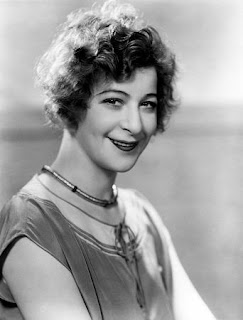
The concept for Baby Snooks has been around since the early 1900's.It started gaining more popularity in 1912, when a young Fanny Brice started doing the part of Baby Snooks in her vaudeville acts.The word spread, and Baby Snooks was welcomed as a guest on other regular radio programs, and also helped advertise things like Maxwell House Coffee.
Finally, in 1944, CBS became the home of The Baby Snooks Show, which aired every Friday at 8:00 pm.Fanny Brice, who was already in her 50's when the show officially aired, played the impossibly loveable Snooks,creating an incredible character with her voiceover skills.Hanley Stafford played Daddy Higgins.Fanny took her portrayal of Baby Snooks very
seriously.Her
backgroud as a comedienne came into play in front of the broadcasting audience,where she would always dress in child's clothing, with a big bow in her hair, and would act out the scene for the audience while it was being recorded.CBS remained the home of Baby Snooks until 1949 when the show moved to NBC.
In 1950, NBC brought The Baby Snooks Show to television.It only lasted for one episode,though.As Fanny Brice said herself, the character of Snooks just "didn't work properly when seen."From then on, The Baby Snooks Show was broadcasted every Tuesday night at 8:30 until 1951.On May 29, 1951, the show was brought to an ubrupt close with the death of it's star, Fanny Brice.There was no possible way anybody could have replaced her as Baby Snooks.

The Baby Snooks Show became one of the most beloved radio programs of all time.


And now, you can enjoy it too.There are quite a few episodes (some in multiple parts) that can still be accessed.These are rare gems, and I encourage everyone to listen to them.They will definitely get you laughing.So, I've picked out two episodes that I've really enjoyed.The second one is in multiple parts,but here they are:
The Baby Snooks Show: "Magic" Aired April 18, 1940http://www.youtube.com/watch?v=JZ9psYtPJpc

The Baby Snooks Show: "Halloween" Aired October 31, 1941
Part 1:
http://www.youtube.com/watch?v=doBtRg5wRcA
Part 2: http://www.youtube.com/watch?v=mWcSxKBFDrM&feature=related
Part 3: http://www.youtube.com/watch?v=dJEldv_brBc&feature=related

Tuesday, July 26, 2011

"Hello,gorgeous."-Fanny Brice

And NOW,Think Classic, 1968 Columbia Pictures and William Wyler proudly present to you:

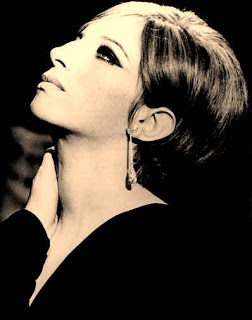
The GREAT Barbra Streisand

In one of the greatest movies of all time....

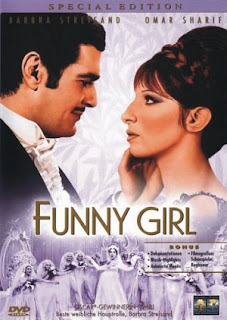
Funny Girl
1968
Starring Barbra Streisand, Omar Sharif and Walter Pidgeon


The film is set in the days just before WWI, with Barbra Streisand acting out true events of the life of actress and comedienne Fanny Brice (1891-1951).

It opens with the famous Fanny Brice, sitting alone in the theater, having just recieved news that this is the day her husband will be coming home.From where, it doesn't specify.Fanny then has nostalgic flashbacks to the early days of her career, when she first met her husband, Nick Arnstein (Omar Sharif), and the early days of their marriage.
At the onset of the flashbacks, the younger Fanny lives in New York City, NY.She's desparate to be an actress-to be on the stage,and be taken seriously,but no one ever gives her the chance to display her talents.Almost by accident, she gets a part in a burlesque performance at Mr. Keeney's revue,which is where she first meets the handsome,charismatic Nicky Arnstein.She doesn't stay long at the revue, though, because it isn't long until the legendary Florenz Ziegfeld (Walter Pidgeon) comes calling.Ziegfeld offers her a part in his show, which she naturally accepts.
Despite a disastrous opening performance, Fanny eventually comes to headline the Ziegfeld Follies.Nick is very supportive of Fanny and, even more remarkable in Fanny's mind, he seems as genuinely interested in her as she is in him.He comes in and out of her life several times, never staying long because he never has definite plans.This leads to some discord between the couple,which they eventually smooth over.After a more steady courtship, Fanny unconventionally proposes to Nick.Arnstein,who gambles for a living,says he will marry her as long as he earns enough in a single card game.Fanny is worried that he won't come through,but in the end he wins a fortune and the two get married.The early days of the Arnstein's marriage are happy and apparently untroubled,but they don't last long.They begin to fight more and more as Fanny's career escalates and Nick's good name gets sullied due to a bad streak of luck whereby he loses his fortune.Nick,wanting to be the man of the family,eventually becomes desparate enough to get involved in a phoney bond deal in order to rake in some extra cash.He gets caught and is arrested.He pleads guilty at his trial,and is sentenced to two years in prison,saying that if he's "lucky," he'll be out in eighteen months.While meeting with his wife just before being escorted to prison, Nick tells her that he wants her to divorce him.Fanny is shocked, and isn't ready to let go.The two of them make a deal,at her insistence, that if he still feels that way after he's let out of prison,then she'll divorce him.
We then return to Fanny,still sitting alone in the theater after reminiscing.She finally goes to her dressing room to prepare for her show that night.Minutes before she's due to go on stage, Nick shows up.His feelings haven't changed,just as Fanny suspected they wouldn't.They say goodbye and go their separate ways.Fanny is heartbroken,but the show must go on.She steps out onto the stage and the film ends with her performance of the song "My Man."
"Oh my man, I love him so.He'll never know.All my life is just despair,but I don't care.
When he takes me in his arms the world is bright, alright.
What's the difference if I say I'll go away, when I know I'll come back on my knees someday?
For whatever my man is, I am his forever more."

The film is brilliant.One of my favorites, it's full of humor and jokes, catchy songs, happiness, love and heartbreak.
It was Barbra Streisand's first film role,for which she won an Academy Award for Best Actress.
The film features 16 songs.The songs "I'd Rather Be Blue," "Secondhand Rose" and "My Man"
were all frequently performed by the real Fanny Brice during her career.And the film itself was produced by Fanny Brice's son-in-law, Ray Stark.

To view the official trailer,follow the link:http://www.youtube.com/watch?v=w5H3Z-ITtCs