About Me

My photo
Lover of anything vintage. I spend my free time looking at antiques,watching and collecting classic films,and reading some of the greatest literary classics known to man.This blog is just my way of sharing my interests with other people.
Showing posts with label silent films. Show all posts

Saturday, January 25, 2014

Presenting the Beautiful Bebe Daniels..


Welcome to the first segment of Silent Saturdays in 2014. It has been a while since we did a Silent Saturdays post, our last one being done on the Master of the Monster, Boris Karloff. We are ready to kick off the new year with a beautiful star of the silent era whose career began over one hundred years ago...

Bebe Daniels
Born January 14, 1901
Died March 16, 1971

Hollywood knew her as Bebe Daniels, but she was born in Dallas, Texas in 1901, and the people there knew her as Phyllis Virginia Daniels. Daniels was born into the theater, some might even say born to be a star. Her father managed his own theater in Dallas, and her mother was an actress. Her parents made the decision to relocate to California for film opportunities when she was still very young. It was in Los Angeles that Daniels first began her career as a child actor. She was only 4 years old when she appeared in the first film production of The Squaw Man (1906), which was based on a play of the same name that had been written the previous year. That particular film would gain more interest through a remake later on in 1914. Later in 1906, her mother accompanied her on a theatrical tour of Richard III, a famous play by William Shakespeare. Though still quite small, Daniels acted in more Shakespearean plays in the following years. Gradually she began to take on small parts in various films, until she was cast in her first lead role at the age of 7 in the motion picture A Common Enemy (1908). She then acquired another lead part, this time in a short picture, as Dorothy Gale in the first motion picture release of The Wizard of Oz (1910), at the tender age of 9. Although those notable roles were important to building her career, nothing was so important as the recurring role that would really put her in the spotlight.
In 1913, one of the most rapidly rising stars of the silent era, Harold Lloyd, began the search for a female costar. He knew he had to find the perfect actress, and he knew that Daniels was exactly what he was looking for. She began working with Lloyd at the age of 14, the two first appearing together in a two-reel film called Giving Them Fits (1915). The two went on to make many more two-reel comedies together. They were not only a good team professionally, but the two also began a romantic relationship, which was highly publicized for that time period. The public affectionately referred to them as "The Boy" and "The Girl." Daniels always recalled her days working with Lloyd with great fondness, but she knew even in the very beginning that she could not stay with him forever. Lloyd was the king of comedy. He had found his niche in Hollywood, and due to his immense success in that genre, he had no intention of moving on to anything else. Daniels, on the other hand, still wished to be working on bigger budget motion pictures. She wanted to break into the darker world of drama, with genuinely emotional parts, and more dynamic characters.
So, in 1919, with a heavy heart but also high hopes, Daniels finished her contract with Lloyd and said goodbye to sign a contract with Cecil B. DeMille. She had smaller parts with him in the films Male and Female (1919), Why Change Your Wife? (1920), and The Affairs of Anatol (1921). A short time later she was offered a contract with Paramount Pictures, which she wisely accepted. It was with that studio that she was finally given the roles she was longing for, and finally broke free from her childhood star status with more adult and complex roles. She played
parts in films such as You Can Never Tell (1920), Ducks and Drakes (1921), and Nice People (1922). Her momentum was gaining with each new picture she released. In 1924 she was cast alongside legendary silent film actor Rudolph Valentino in the motion picture Monsieur Beaucaire (1924). This was exactly the kind of opportunity that she had been looking for, and which she undoubtedly would never have had if she had not made the decision to leave Lloyd and his studio.
Daniels remained with Paramount for the majority of the 1920s. In 1929, the studio decided to try going in a different direction with the development of sound equipment, so they terminated her contract. She was quickly picked up by Radio (RKO) Pictures. Not only that, but they immediately cast her in one of their biggest blockbuster pictures of the year. She survived the transition into talkies, and did so well that RKO even cast her in musicals such as Dixiana (1930). Musicals understandably had booming success rates when talkies first hit the scene, but that did not last terribly long. Unfortunately, Daniels had excelled in musicals at RKO so that when they decided to stop making them, they also couldn't decide what to do with her, so they released her. Warner Brothers was already waiting to offer her a contract. With them she starred in such films as Honor the Family (1931), and the first film production of The Maltese Falcon (1931), which was produced and released before the Motion Picture Production Code came into effect. She stayed with Warner Brothers for several years, her last picture with them being Registered Nurse (1934). The following year she officially retired from the film industry.
Daniels had met fellow actor Ben Lyon several years previously, and the two of them married in 1930. They both made the decision to go into retirement together. Following this decision, the two of them moved to London, England. While living in Europe, the couple worked together for BBC Radio. Their most successful venture with BBC was the series Hi Gang!, which Daniels wrote herself. When WWII hit Europe, especially England, Daniels and her husband devoted their time and work to war efforts aiding the allies. Not everything she did for them is known, although it has been historically noted that she was the first woman to set foot on the shore of Normandy after the invasion. Whatever work she did, it culminated in the honor of receiving the Medal of Freedom from Harry S. Truman for her services. Daniels remained in Europe until the war ended in 1945, and then she and her husband and 2 children returned to the United States. She found herself in Hollywood once again, working as a producer for Hal Roach and Eagle-Lion Films. She was quickly reminded of why she had decided to go into retirement in the first place, and returned to England 3 years later. Once reestablished in the UK, she and her family had moderate success with a sitcom called Life With The Lyons, which lasted for 10 years. She lived out the rest of her days in London with her family. On March 16, 1971, Bebe Daniels passed away due to a cerebral hemorrhage. She was 70 years old.
After her passing she was cremated and her ashes were transported back to the United States, to be interred in the Hollywood Forever Cemetery in honor of her achievements in the film industry--a total of 78 major motion pictures, 1 produced motion picture, and decades of successful radio programming.
Over 60 of her films were silent.


"...Someday I want to do really big things."
-Bebe Daniels

"When I was a little girl, I played in a great many Shakespearean plays, and when I saw 'Viola,' and 'Portia' and 'Juliet' presented in such a beautiful manner, I hoped with all my might that when I grew up, I too might play such parts."
-Bebe Daniels

"Now go out there and be so swell that you'll make me hate you."
-Bebe Daniels


Saturday, June 22, 2013

"The monster was the best friend I ever had."-Boris Karloff


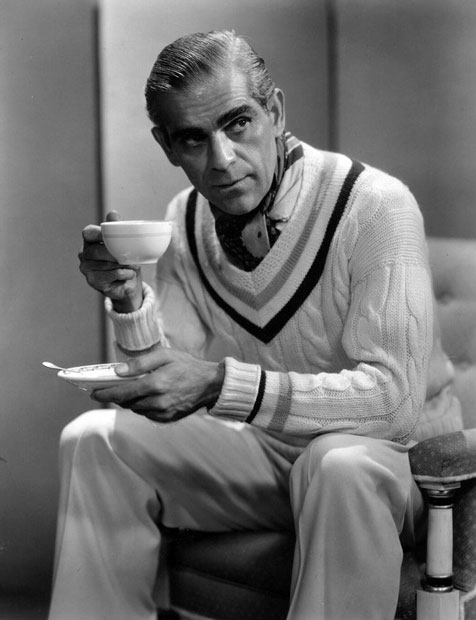
Welcome to another segment of Silent Saturdays! We're excited to share another wonderfully talented star with you today. The subject of today's post is well known to most people even today, for his trademark roles as a villain or antagonist. Many people do not realize, however, that his climb to fame began during the silent era.

Boris Karloff
Born November 23, 1887
Died February 2, 1969

A blue commemorative plaque marks the address where William Henry Pratt was born in Honor Oak, LDN, England in the fall of 1887. He was the youngest of 9 children, born into a family of rich Anglo-Indian heritage. He was also the great-nephew of Anna Leonowens, who was the inspiration for the famous musical The King and I.
Pratt's mother died when he was relatively young, and he was left in the care of some of his older siblings. He graduated from Merchant Taylors' School, and then went on to study consular service at King's College in London, but he never graduated. He decided to leave school in 1909 and began looking for work wherever he could find it. Many of the odd positions he found involved difficult manual labor, resulting in back problems that he struggled with for the rest of his life. During this time, Pratt almost accidentally stumbled into the world of acting, but it was clear that he had a peculiar gift. Not even a full year after he dropped out of school, he moved to Canada and changed his name to Boris Karloff. No one is quite sure where he came up with the name, but his reasoning for its change was quite clear. Most of his older brothers had prominent jobs in foreign services, and Karloff was afraid of letting them down or embarrassing them with his chosen career path. He believed this until he reunited with his family over 20 years later, at which time he was pleasantly surprised to discover that they were all immensely proud of him and his achievements.
After 2 years in Canada, Karloff became a part of the Jeanne Russell Company in 1911. He stayed with this group for at least a year. Moving on and looking for more work to support him, Karloff took on a job as a
baggage handler for a railway company. This eventually took him to Minot, North Dakota, where he was introduced to the Harry St. Clair Co.  He joined up with them and spent another year performing in various roles in a sort of makeshift theater that was located in the upper story of a hardware store.
Eventually, Karloff found himself in Hollywood, and while there was work for him, he still did manual labor to get by in between parts. Several of his earliest roles were for film serials, such as The Lightning Raider (1918), The Masked Rider (1919), or The Hope Diamond Mystery (1921). He also had parts in iconic films such as the earliest on screen production of The Last of the Mohicans (1920). In his early days in the land of the stars, Karloff had yet to be cast into any of his monster roles. During the silent era, he was primarily used to portray dark and mysterious foreigners, or villains. His first talkie was Behind That Curtain (1929).
While people were familiar with Karloff, he didn't catch his first big break until he was cast as the monster in the movie Frankenstein (1931). Karloff was very lucky to get the part, and only did so because better known actors turned it down because it had no real speaking parts. The role was also very strenuous. The costume was heavy and bulking--especially the platform shoes that he was required to wear which weighed 11 lbs per foot. Heavy makeup was also a difficult and sometimes tricky prospect in those days, with the potential to be poisonous if too much of it was worn for too long. But Karloff took out life insurance for the project and endured the hours of preparation that turned him into the monster. His patience paid off, and the 1931 picture was an iconic success.
From that time, Karloff was offered better roles. He was the original Imhotep in the 1932 version of The Mummy, and also had a memorable part in the film Scarface later that year. While he certainly did not always play a monster, Karloff had found his niche with it. There were two sequels that gave him the opportunity to reprise his role as the Frankenstein monster, The Bride of Frankenstein (1935) and Son of Frankenstein (1939). He also returned to the story of Frankenstein later in life, but in a different role. He played the scientist both times with House of Frankenstein (1944), and Frankenstein 1970 (1958). 
Karloff had many other important roles throughout the 1930s, such as The Raven (1935), The Black Cat (1934), and The Tower of London (1939). During the 1940s, Karloff dabbled with radio, even having his own anthology series called Starring Boris Karloff. It was also during the forties that Karloff took some time to pursue stage work on Broadway, which he loved. His first reappearance on the stage was in the original Broadway production of Arsenic and Old Lace in 1941--a role that he would reprise once more on screen in the course of his life. Other roles he had on stage were that of Captain Hook in Peter Pan, and a part in The Lark, which he would also reprise later on for television.
Moving into the 1950s, Karloff took on a television role in the British series Colonel March of Scotland Yard. He became a regular on TV segments such as NBC's Who Said That?, and The Red Skelton Show. He continued to work on many different projects until the end of his life, despite having one of his lungs removed and having to use oxygen between takes. Perhaps one of the pieces of his later work that he is most recognized for is using his voice talents for the main character and narration of the 1966 special How
the Grinch Stole Christmas.
Despite being known for his villainous roles, Karloff was reportedly a very kind and generous gentleman. He invested much of his time and money in charity work, especially anything that helped children. In 1940 he dressed up as Father Christmas and handed out presents in the children's ward of a hospital in Baltimore, Maryland--a tradition that he carried out every year as long as he was physically able. He was a devoted father to his own daughter, Sara Karloff, who was born during the filming of Son of Frankenstein, which resulted in Karloff rushing to the hospital in his full costume at the time of her birth.
Towards the end of his life, Karloff moved back to England full time, spending the rest of his days in his home, known as Roundabout Cottage. He struggled with severe arthritis as well as emphysema. He contracted pneumonia and died due to complications on February 2, 1969, at the age of 81.
Boris Karloff had a remarkable career in many different genres. He left his mark in the worlds of television, radio, and of course film. Over the course of his career, he made 162 motion pictures, 56 of which were silent films from the early days of his career. Amazingly, he never received any awards for his work, but that makes it no less important or remarkable.


"One always hears of actors complaining of being typed--if he's young, he's typed as a juvenile; if he's handsome, he's typed as a leading man. I was lucky. Whereas bootmakers have to spend millions to establish a trademark, I was handed a trademark free of charge. When an actor gets in a position to select his own roles, he's in big trouble, for he never knows what he can do best. I'm sure I'd be damn good as Little Lord Fauntleroy, but who would pay ten cents to see it?"
-Boris Karloff

"My dear old monster..I owe everything to him. He's my best friend."
-Boris Karloff

"You could heave a brick out of the window and hit ten actors who could play my parts. I just happened to be on the right corner at the right time."
-Boris Karloff


Saturday, May 25, 2013

Silent Saturday


Welcome to the second installment of Silent Saturdays, but most importantly, welcome back to Think Classic! We sincerely apologize fore being so useless and silent for the last few months. We are looking forward to getting back into the swing of things, starting with this post!

Today we are honoring a radiant jewel who still holds her luster from the silent era, despite the fact that she so often gets overlooked due to unfortunate circumstances at the time of her career.

Marion Davies
Born January 3, 1897
Died September 22, 1961

Marion Cecilia Douras was born in Brooklyn, New York in the winter of 1897. She was the youngest of five children--four daughters and one son, born to Rose and Bernard Douras. Marion's father was a judge in New York City. She came from a respectable family, but as she and her sisters grew older, they all willingly changed their surname to "Davies." One of the girls had seen the name on a real estate sign and they felt that it might be helpful in their future careers to be represented by a name that alludes to British ancestry. The Davies family was very religious, and all of the children were educated in a private state convent. Eventually, Marion decided that her goals lay beyond the realm of academic achievement, so she left school to build her career.
Davies soon found work as a model and she had several jobs posing for different artists and magazines. At the age of 18 she became one of the infamous Ziegfeld girls and joined up with the Ziegfeld Follies. It was later that same year that her modeling career landed her in front of a different kind of camera. She was chosen to model gowns by designer Lady Duff-Gordon on a newsreel. The next year, Davies appeared on the screen in the film Runaway Romany (1917), which she was also privileged enough to be able to take part in behind the scenes. Davies actually wrote the film herself, and was allowed some creative license due to the fact that the renowned director, George W. Lederer, was her brother-in-law. Critics and audiences alike seemed to automatically take a liking to this beautiful new talent--they wanted to see more of her.
And so they did. She starred in three different films in 1918--The Burden of Proof, Beatrice of Fairfax, and Cecilia of the Pink Roses. These roles turned out a good profit for Davies, who led a comfortable lifestyle. She was also always very generous with her earnings, and used them to help out her family and friends in any way she could. As time went on, she would also prove to be a very astute businesswoman with investments and donations.
In 1917, Davies became romantically involved with newspaper mogul William Randolph Hearst, who played an interesting part in her career. The two apparently truly cared for one another, and yet they were often at odds within their relationship. Hearst genuinely wished to further Davies in her career, but thought that she would excel in elaborate and expensive costume dramas, rather than the lighthearted comedies that suited her so much better. This difference of opinion might not have been so significant had Hearst not had the financial means to so thoroughly manage her career. As it was, he took it upon himself to relentlessly promote her in the papers, and would even step in and fervently insist that she be given specific roles. No one refused him. In 1918, Hearst outdid himself when he opened his own studio called Cosmopolitan Productions, with the sole intent of using it to bolster Davies' career. Certainly the publicity played its part, and Davies was very quickly becoming one of the most promising stars in the industry.
As time went on, most people began to take note of Davies for other reasons. The lavish
lifestyle she lived, largely due to Hearst, escaped nobody's notice. In all of the years that she spent with Hearst, she never complained about the way that he managed things. It was not until much later in her life that she admitted via her memoirs that he ended up playing a part in the downfall of her career. She seemingly gladly accepted the roles that Hearst placed in front of her, which cast her as more elegant and dramatic characters. But Hearst could never completely eliminate her natural bend for comedy. As Davies rubbed shoulders with Hollywood's most elite, many people could not help but notice her gracious and amusing personality which allowed her to shine as the center of attention at any social gathering. Directors such as King Vidor did their best to tap into her true personality for the roles that they gave her in more contemporary comedies such as Not So Dumb (1930), or The Patsy (1928).
Many of the high points of Davies' career in film happened before talkies dominated the big screen. Davies was apprehensive with the developments of microphones which would enable people to hear her speaking voice, since she had never fully recovered from a stutter since childhood. She was one of the lucky ones, however, who managed a relatively smooth transition and was therefore able to continue on in her career. She did well in the early 1930s, finding herself cast alongside the likes of Leslie Howard, Clark Gable, Bing Crosby, and Gary Cooper in such pictures as Five and Ten (1931), Polly of the Circus (1932), Going Hollywood (1933), and Operator 13 (1934).
The relief that came after her transition to talkies at the beginning of the 1930s was short-lived. In another attempt to steer her away from comedy, Hearst tried to cut a deal with producer Irving Thalberg. He wanted Thalberg to cast Davies as the lead in the epic drama Marie Antoinette. Thalberg ended up giving the famous part to his own wife, actress Norma Shearer. Davies, who was good friends with the Thalbergs at the time, had no objection to this decision. Hearst became angry and severed all ties with Thalberg and publicly pulled his support from MGM--a fatal move for Davies' career. He instead moved Cosmopolitan Productions to team up with Warner Brothers. Davies made only three more pictures under these new arrangements before Cosmopolitan folded. She then made the decision to retire from the film industry, knowing that after the last 20 years, she had done all she could. She devoted herself to caring for Hearst for the next decade, until his death in 1951.
Later in 1951, Davies moved on and married Horace Brown. It was a tumultuous marriage, but the couple remained married until her death. She spent the rest of her life tirelessly doing charity work, founding the Mattel Children's Hospital and the Marion Davies Foundation to fight children's diseases. Marion Davies struggled with various illnesses and injuries in her older age, and she eventually succumbed to stomach cancer on September 22, 1961 at the age of 61.
About 30 years after her death, Davies' niece, Patricia Lake died from lung cancer. Just after her death, a secret was broadcast which Lake had kept to herself since she was 17--that she was not, in fact, Davies' niece, but her daughter. Davies became pregnant in the early 1920s and Hearst sent her to Europe until the baby was born. They decided to give the baby to one of Davies' sisters who had recently lost a child in infancy, so that she could raise her as her own. So Patricia was raised as Davies' niece, despite the fact that she looked remarkably like Marion and spent most of her time with her and Hearst. Davies and Hearst privately passed on the finances to make sure that Patricia received the best possible care and education, and it was even the two of them who gave her away at her wedding, which was also the time when Hearst finally told her that they were her parents.
It was a scandalous piece of news that shocked many, especially since it had been kept a secret for so many years. But it is not the only thing that Davies is remembered for. Her work has stood the test of time. Although Hearst may have prevented her career from fully developing to the heights that she was capable of reaching during her lifetime, she still made her mark on Hollywood. During her 20 year career in the film industry, she starred in 55 motion pictures, 34 of which were silent. She made a name for herself, especially during the first part of her career which developed during the silent era. Audiences and critics today still look back at her work and are drawn to her talent just as they were 95 years ago--they want to see more of her.


"Somebody told me I should put a pebble in my mouth to cure my stuttering. Well, I tried it, and during a scene I swallowed that pebble. That was the end of that."
-Marion Davies


And now, as a little something extra which allows you to see an example of Marion Davies' comedic talents. This is a clip from her 1928 silent film The Patsy. Davies was known for her party impersonations of other actresses. In these scenes, King Vidor allowed her free reign to act out her own imitations of actresses Mae Murray, Lillian Gish, and Pola Negri:


Tuesday, January 29, 2013

New things for a new year..

Hello everybody!

Do you like the new page and logo? It was time for a bit of a makeover since it is now officially 2013. We were kind of thinking "less is more."

That's not all that's new around here, though. This year you can still look forward to our regular posts and stories in conjunction with the TCM Star of the Month. You can also count on having special seasonal posts again this year like A Very Vintage Christmas. But we're excited to announce a couple of new ideas that we are going to test out in an effort to catch the attention of people who hold an interest in more specific genres.

The first one, inspired as you can no doubt guess by our most recent post, is a new segment titled Silent Saturdays. We often overlook silent films even though we love them, and we'd love to share that interest with you. So, one Saturday a month we will be doing a post on great actors, actresses, and their movies of the silent film era. We'll also post full features and short silent films in conjunction with that on our Facebook page as they are made available.

The second one we are going to do is Musical Mondays. It hasn't escaped our notice that musicals also tend to have their own special following these days because they are so often automatically dismissed and brushed aside unjustly for supposedly  being "corny" or "cheesy." Well, we love musicals (of course we do). So here's another chance to highlight a specific genre that isn't getting much love anymore. It'll work just the same as the other new segment--one Monday a month we'll highlight a different musical and why we love it, and we'll upload hit songs onto our Facebook page to go along with it.

We hope you'll be cinematic nerds along with us and get jazz hands over these new posts, as well as all the old ones!
hahaha...I couldn't resist. Punny.

Friday, January 25, 2013

"..I just took life and poked fun at it..."-Harold Lloyd

I love to laugh and I love watching comedies. I especially harbor a love of silent comedic films which are usually comedies of errors or rather unfortunate circumstances. Whether I am watching Buster Keaton, Charlie Chaplin, or the subject of today's post, it always amazes me as I watch how they can truly portray comedy from tip to toes without speaking a single word. And while I love many of the comedians from the silent era, today I just wanted to share with you one of my personal favorites, who also happened to star in the first silent film that I ever watched...

Harold Lloyd
Born April 20, 1893
Died March 8, 1971

Named for his paternal grandfather who hailed from Wales, Harold Clayton Lloyd was born Burchard, Nebraska at the end of the 19th century. Given the bright spotlight that centered on Harold, many people do not know that he had an older brother named Gaylord who was also moderately successful in the film industry, having acted at the beginning of his career, but later settling for jobs behind the camera. It is perhaps because of his older brothers involvement in motion pictures that young Harold took an interest from an early age in theater. He took it upon himself to get involved in vaudeville and exercise/develop his talents even before his family moved to California when he was in high school. After he graduated from San Diego High School, he went on to study at the San Diego School of Dramatic Arts.
Lloyd quickly tapped into the industry after his move to California. He soon made an affiliation with Thomas Edison's film company and was creating one-reel comedic films. When the then not-so-famous Hal Roach formed his own company in 1913, he took on Lloyd and the two of them collaborated together on many projects. One of the first things that Lloyd undertook was hiring a co-star. He eventually chose Bebe Daniels. The two worked together on many projects for the next 6 years and were as much of a hit off screen as on, since it was common knowledge that the two were a couple. Audiences affectionately referred to them as "The Boy & The Girl." In 1919, Daniels felt like she was being confined to the studio and wanted to branch out on her own, so she left the company and Lloyd to build her own career.  Lloyd only suffered from the heartache for a short period of time until Mildred Davis was hired as his new co-star that same year. The two married in 1923.
During those beginning years, Lloyd formed a comedic persona all his own. His friends and co-workers frequently joked to him that he was far too handsome to star in screwball comedies, so he created his own look. Along with the customary heavy stage makeup, his character developed the trademarks of a straw boater hat and thick-framed round glasses. Lloyd also created a reputation during this time as a creative yet sometimes reckless stuntman. He was very athletic by nature, and whenever his character was caught in a sometimes physically trying predicament, Lloyd would insist on doing the work himself. He sustained many various smaller injuries over the course of his career, but seriously hurt himself in 1919. Ironically, Lloyd was merely posing for a promotional photograph when the accident occurred. He was holding a small bomb that was thought to just be a prop, yet it promptly went off in his hand causing him to lose two fingers. For the rest of his career he wore a prosthetic glove while acting in his films. Due to the pictures being in black and white, most people never knew the difference.
By 1921, Lloyd and Roach were still working together and decided to make a move into feature length films. They produced several successful films such as Grandma's Boy (1922), Why Worry? (1923), and one of his most memorable films, Safety Last! (1923). After the success of these films, Lloyd decided to expand and begin producing his own films beginning in 1924, so as to have more room for his creativity. It was once he branched out on his own that Lloyd then starred in his most accomplished films such as Girl Shy (1924), The Kid Brother (1927), Speedy (1928), and his highest-grossing film The Freshman (1925).
Speedy proved to be his final silent film. The film industry was taking a turn that promised growth and expansion with the development of sound equipment. Talkies were rolling into production. As with many silent film stars, there was some concern in the film industry as to whether or not Lloyd's career would transfer successfully when he could be heard. Lloyd did not ruffle his own feathers about it and just went on with business as usual. Since he was one of the highest paid stars during the silent film era, audiences everywhere were excited to see how Lloyd would do, and what he would sound like, in these new films. Welcome Danger (1929) was one of the last films released before the chaos of the Great Depression ensued. It was enormously successful. Once the stock market crash occurred and the Great Depression took hold of the nation, Lloyd's career slowed down a bit for the next 10 years, but he still continued to work. He trudged on through most of the 1940s, although he eventually sold the land of his production company to a branch of the Church of Jesus Christ of Latter-day Saints, which remains there today. In 1944 Lloyd began to dabble in the realm of radio, hosting The Old Gold Comedy Theater for its duration. Once that program died out, Lloyd slowly began to sink into retirement, but he took it in stride, becoming very involved in many different charities. He was also a family man throughout his life. He and his wife, Mildred, were married until her death in the 1960s, and they were kept very busy with their 3 children.
Harold Lloyd was a revolutionary worker of creativity and comedic talent in the film industry. He starred in 188 comedic films in his early career, and 17 feature length films. He did much experimentation with color, technicolor, photography, and 3D, and he was also one of the founding members of the Academy of Motion Picture Arts and Sciences. His film Safety Last! remains the oldest film listed on the American Film Institute's list of 100 Most Thrilling Movies. He died in 1971 at the age of 77 due to cancer.


"The man who tries to be funny is lost. To lose one's naturalness is always to lose the sympathy of your audience."
-Harold Lloyd

"The more trouble you get a man into, the more comedy you get out of him."
-Harold Lloyd

"Comedy comes from inside. It comes from your face. It comes from your body."
-Harold Lloyd